
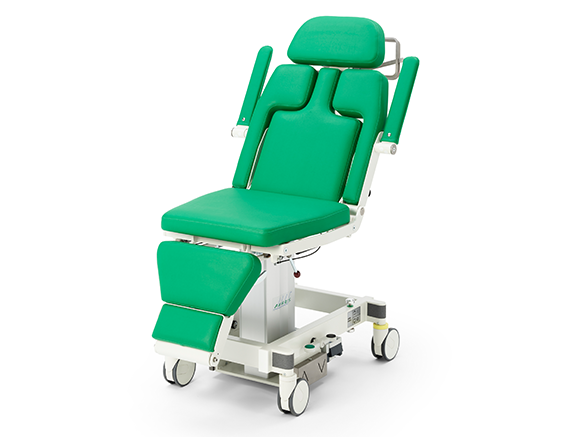


Guide: Surgical Chairs and Surgical Tables
for dermatology
The Right Equipment for Examinations, Treatments, and Outpatient Procedures
Dermatology combines diagnostics, conservative therapy, aesthetic treatments, and surgical procedures. The right equipment supports stable patient positioning, provides good access to the treatment area, and facilitates ergonomic work.
AKRUS supports you in setting up your dermatology workspace with mobile surgical chairs, surgical tables, and ergonomic seating solutions for the treatment team. This guide highlights typical applications, positioning requirements, and key selection criteria.
Why the Right Equipment Is Important in Dermatology
Dermatological examinations and treatments are performed on various parts of the body. During a skin examination, the patient’s position often changes, whereas a surgical procedure requires the treatment area to be held in a stable position.
A flexibly adjustable examination table helps to combine these tasks in everyday practice. It provides access to the face, torso, and extremities and supports a working position that is close to the patient’s body. Especially during longer treatments, it is crucial to balance patient comfort, unobstructed access, and the ergonomics of the treatment team.
Applications in Dermatology and Dermatological Surgery
Dermatology deals with diseases and changes affecting the skin, mucous membranes, hair, and nails. Dermatologic surgery complements this specialty by involving surgical procedures on the skin and tissues adjacent to the skin. Many procedures can be performed on an outpatient basis under local anesthesia.
Depending on the body region and treatment, the requirements for positioning, working height, and accessories vary. The following examples illustrate typical areas of application.
Skin examinations and diagnostic tissue biopsies
For skin examinations and reflected-light microscopy, the area of the body being examined must be easily accessible. A height-adjustable examination table with an adjustable backrest allows for changing positions. For biopsies, the biopsy site is made freely accessible and positioned so that it can be held still during tissue removal.
Removal of Skin Lesions and Skin Tumors
Dermatosurgery involves the removal of benign and malignant skin lesions. A suitable surgical table or chair facilitates access and helps maintain a stable position during the procedure and wound closure. A proper headrest is particularly important for procedures on the head.
Cysts, Lipomas, and Procedures on the Nail Bed
The removal of cysts and lipomas, as well as surgeries on the nail bed, are also among the dermatological applications. The position depends on the affected area of the body. Adjustable segments and appropriate supports help ensure that the treatment area is accessible while also allowing the patient to be positioned comfortably.
Laser Treatments and Aesthetic Procedures
For laser treatments, injections, or chemical peels, it is important to have an easily accessible treatment area and a suitable working height. Depending on the body area and procedure, patients may be treated in a seated, semi-seated, or supine position. An adjustable treatment chair or treatment table helps meet these requirements.
Wound Care and Follow-Up Care
When changing dressings and checking wounds, the affected area of the body must be easily accessible. An adjustable treatment table makes it easier to position the arms or legs and promotes a comfortable working posture. Comfortable padding and easy access help people with limited mobility.
Positions in the Operating Room and Treatment Room
Patient positioning depends on the procedure, the area of the body being treated, and the patient's individual physical condition. The treatment team determines which position is appropriate and what support is needed.
Supine Position
The supine position allows access to the face, front of the torso, and extremities. A properly fitted headrest and supportive padding promote a comfortable position. The lying surface must provide sufficient space for the intended body position.
Seated and semi-seated positions
An upright upper body position may be beneficial for certain examinations and treatments. The backrest, seat, and headrest help stabilize the patient's posture. The seat height can be adjusted to match the treating professional's working position.
Lying on one's side
When treating areas on the sides of the body, lying on one's side can facilitate access. The head, torso, and extremities require coordinated support. This keeps the patient in a stable position while ensuring that areas under pressure are adequately cushioned.
Prone position
Certain back treatments may require the patient to lie on their stomach. The head and body must be properly supported; pressure on the eyes should be avoided, and breathing should be as unobstructed as possible. The treatment surface, headrest, and positioning aids must be suitable for this purpose.
What kind of equipment is suitable for a dermatology practice?
The equipment depends on the services offered: diagnostics, surgical procedures, and supplementary workplace equipment each have different requirements.
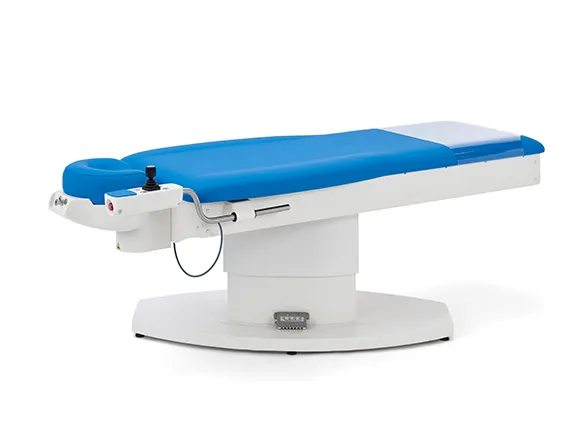
For diagnostics, an examination table is a suitable option. An appropriate working height, an adjustable backrest, and suitable padding support examinations and general treatments.
For surgical procedures, suitable surgical chairs and surgical tables are appropriate. Depending on the model and features, both can support different patient positions and surgical functions. Key factors include the required patient positioning, working height, access to the treatment area, and the appropriate accessories. Among the AKRUS models, the sb5010 series offers a longer lying surface than the sc5010 series.
Additional features include lighting, instrument trays, and ergonomic seating solutions for the treatment team. Headrests, armrests, and other accessories are selected to suit the intended applications.
Therefore, the designation as a chair or treatment table alone does not determine its suitability for a procedure. The decisive factors are the functions and the intended use of the respective model.
Requirements for Surgical Chairs and Surgical Tables in Dermatology
Height Adjustment and Ergonomics
Height adjustment brings the treatment area to a working height suitable for the team. It supports both seated and standing activities and makes it easier to switch between different procedures.
Adequate legroom allows the practitioner to work close to the treatment area. A low entry height makes it easier to sit down, while a higher working position can be particularly helpful for standing tasks.
Headrest, Backrest, and Seating Surface
During treatments on the face or scalp, the headrest must provide support without unnecessarily restricting access to the treatment area. Different shapes and adjustment options allow for adaptation to the specific application.
An adjustable backrest and additional adjustable segments support proper body positioning. The dimensions of the treatment surface and the available cushions help determine how well the table can accommodate different body sizes and positioning requirements.
Stability and Load-Bearing Capacity
A stable position is essential for precise work. On mobile surgical chairs and operating tables, locked casters prevent the chair or table from rolling away unintentionally during treatment. Even after adjusting the backrest or other segments, the selected position must be securely maintained.
The maximum patient weight capacity depends on the model and its configuration. A suitable lift column and appropriate accessories allow the system to be configured for the intended patient population. The load specifications for the specific system selected are decisive.
Padding, Hygiene, and Workmanship
Comfortable padding supports a comfortable position, especially during longer treatments. The shape and thickness of the padding should be suited to the application and the required positions.
Easily accessible surfaces facilitate cleaning between treatments. Covers must be capable of being cleaned using the cleaning and disinfectant agents approved by the manufacturer. Replaceable cushions and robust construction are also essential for long-term use in everyday practice and clinical settings.
Operation and Mobility
Electric adjustments make it easy to adjust the working height and patient position. Clearly labeled controls allow for precise adjustment of individual functions. A foot control can assist with adjustments while keeping the hands at the treatment area.
Mobile systems can be flexibly positioned within the treatment area. If the model is designed for patient transport, the same system can be used to move the patient between preparation, treatment, and post-treatment care. At the treatment station, locked casters ensure stability.
AKRUS Solutions for Dermatology
Mobile surgical chairs and surgical tables with a variety of adjustment options are available for dermatological examinations, treatments, and outpatient procedures. Additional headrests and other accessories allow the workstation to be customized for specific applications.
sc5010 ES
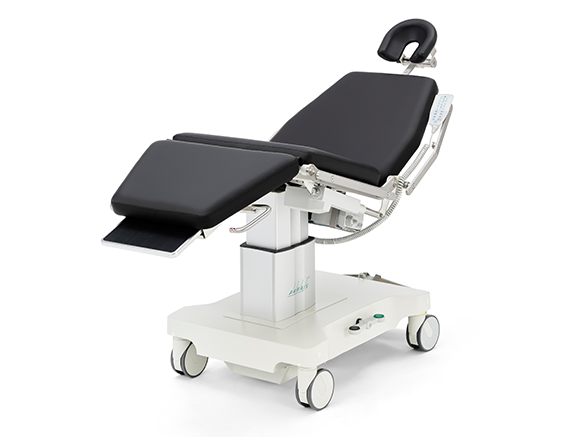
The sc5010 ES mobile surgical chair combines a low entry height with individually and electrically adjustable head, back, seat, and leg sections. The legroom promotes a working position close to the patient’s body during procedures performed while seated.
-
Battery-powered operation and mobile chassis
-
Individually adjustable segments for sitting and lying positions
-
Low entry height and various headrests
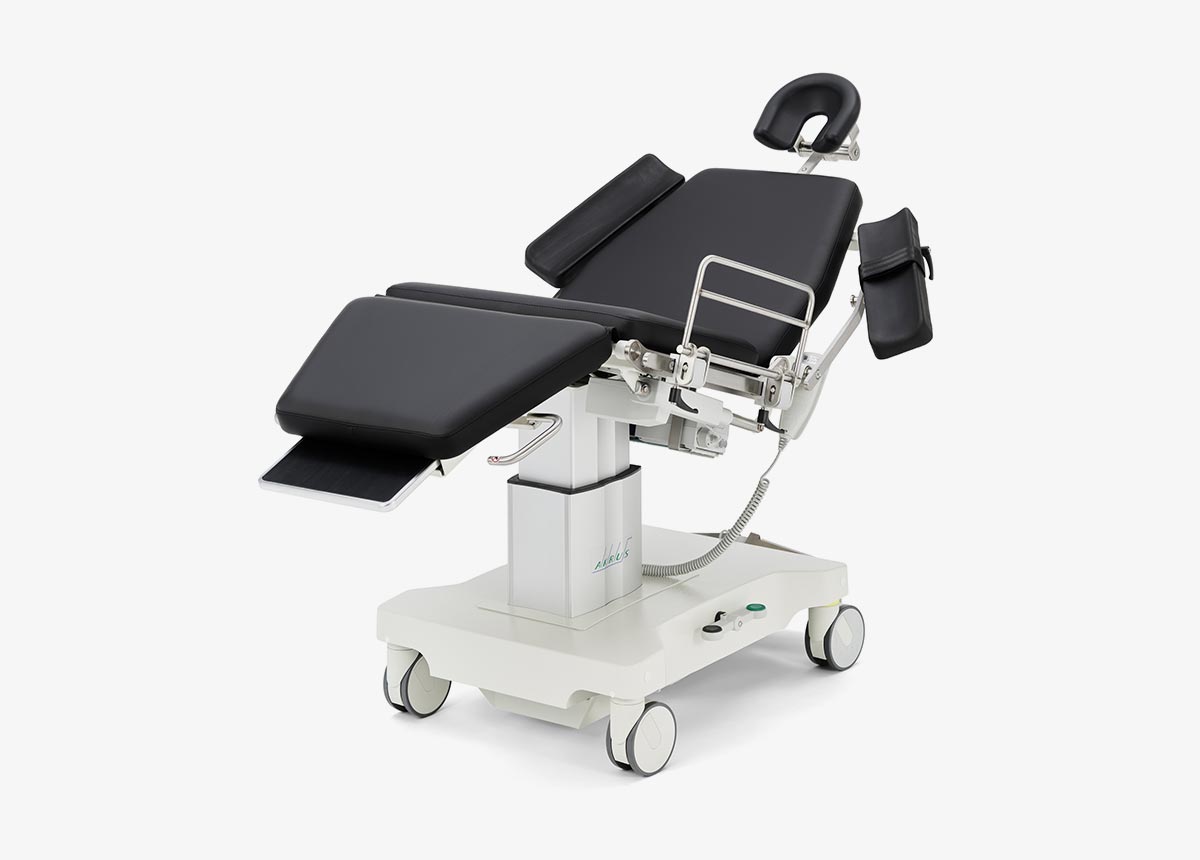
sc5010 HS
Compared to the ES model, the sc5010 HS offers a higher working position. This is particularly beneficial for applications where the treatment team works while standing. Individually adjustable segments and various headrests facilitate positioning during procedures in the head and face area.
Mobile surgical chair with a higher working position
Individually adjustable head, back, seat, and leg sections
Battery-powered operation and additional accessories
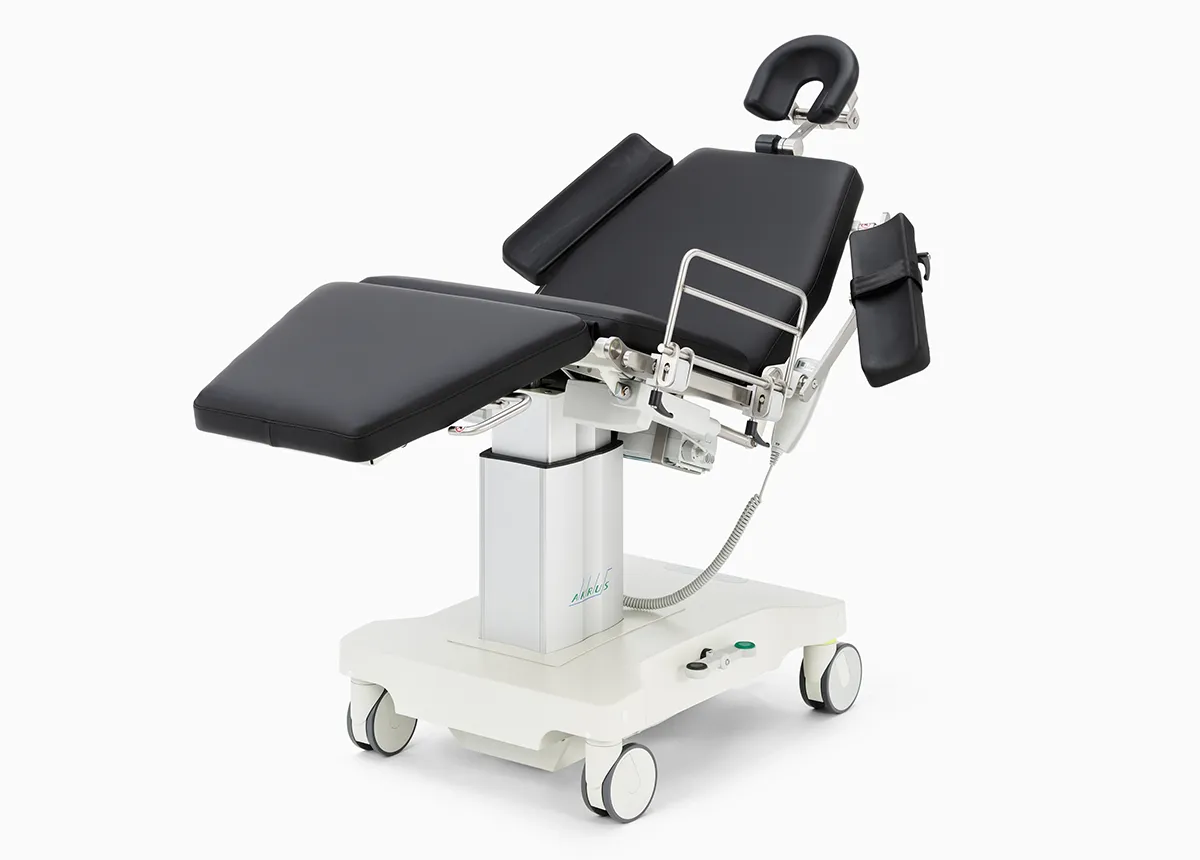
sb5010 ES
The sb5010 ES mobile surgical table offers a longer lying surface compared to mobile surgical chairs. Adjustment options for the head and back areas help customize the patient’s position.
The ES model combines a low entry height with a height range suitable primarily for seated activities.
- Battery-powered and mobile
- Longer lying surface compared to the sc5010 series
- Compatible headrests and additional accessories
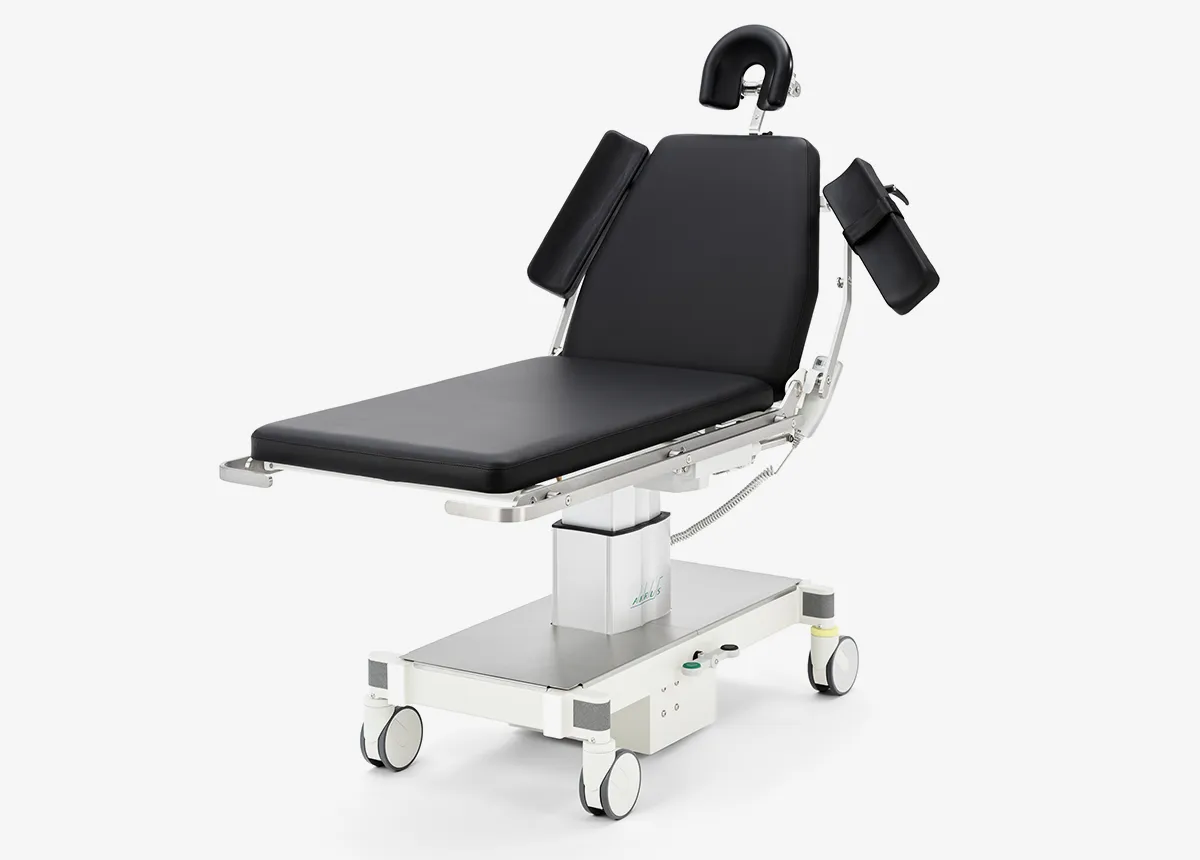
sb5010 HS
The sb5010 HS mobile surgical table offers a longer lying surface compared to mobile surgical chairs. Adjustment options for the head and back areas allow for customization of the patient’s position.
The HS model allows for a higher working position, thereby also supporting work while standing.
- Battery-powered and mobile
- Longer lying surface compared to the sc5010 series
- Compatible headrests and additional accessories
Additional Equipment for the Dermatology Workstation
In addition to the patient table, an ergonomic workspace also includes appropriate seating solutions and accessories for the treatment team.
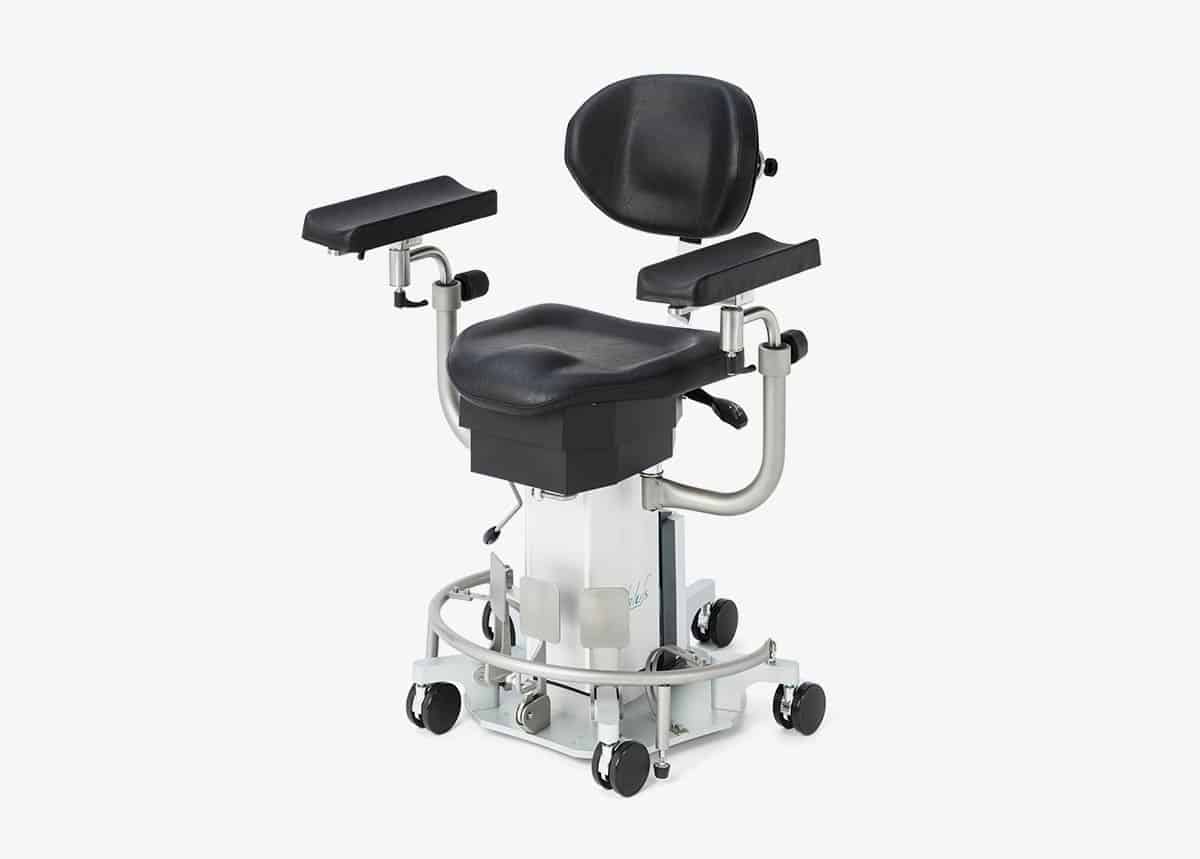
ak480 Surgical Chair
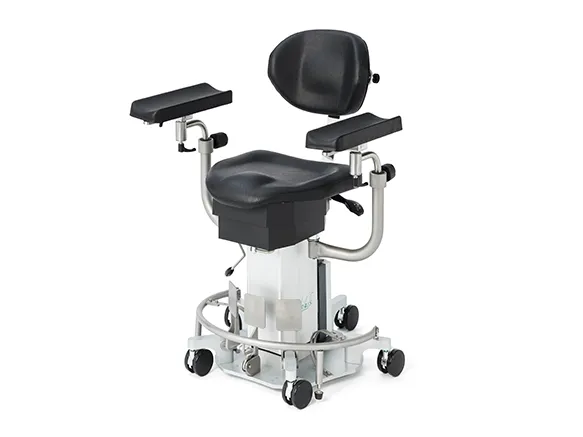
The electrically height-adjustable ak480 supports the practitioner during procedures performed while seated. Adjustable armrests and a backrest allow for a customized seating position. The chair is battery-powered and features a castor system with a locking mechanism.
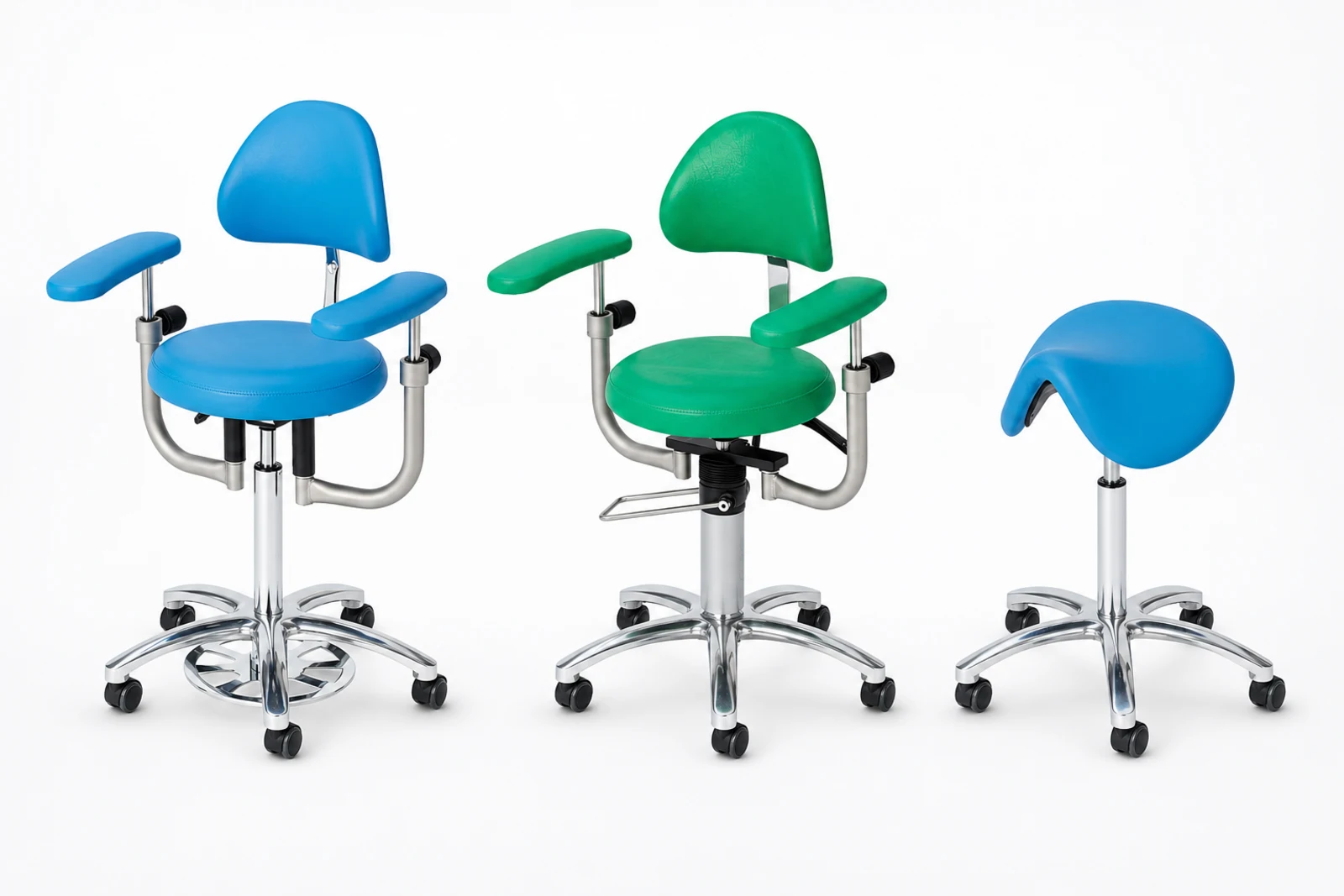
ak445, ak446, and ak447 Doctor's Stools
A variety of seat shapes and height adjustments allow for customization to the specific workstation. Depending on the model, optional backrests and armrests are available. This provides ergonomic support for both treatment and assistant tasks.
Additional Accessories for Dermatology
Headrests, armrests, and positioning aids complement the dermatology workstation. The selection depends on the intended patient position, the treatment area, and the surgical chair or operating table being used.
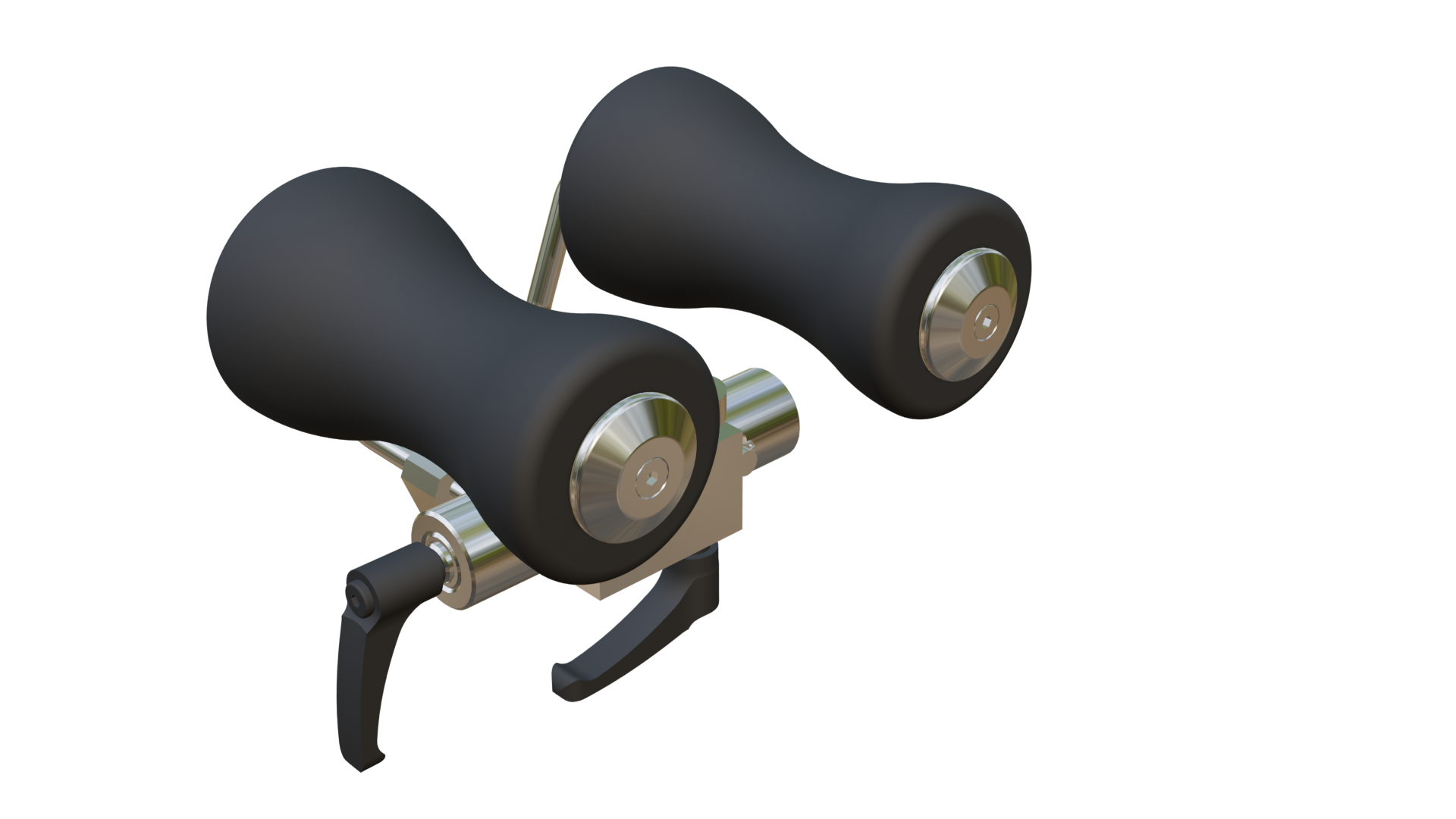
Multi-joint headrest with a 2-point retention system
Flexibly adjustable headrest for positioning the head and exposing the respective side of the face or the ear. Supplied without headrest bracket.
Item No.: 241.030648
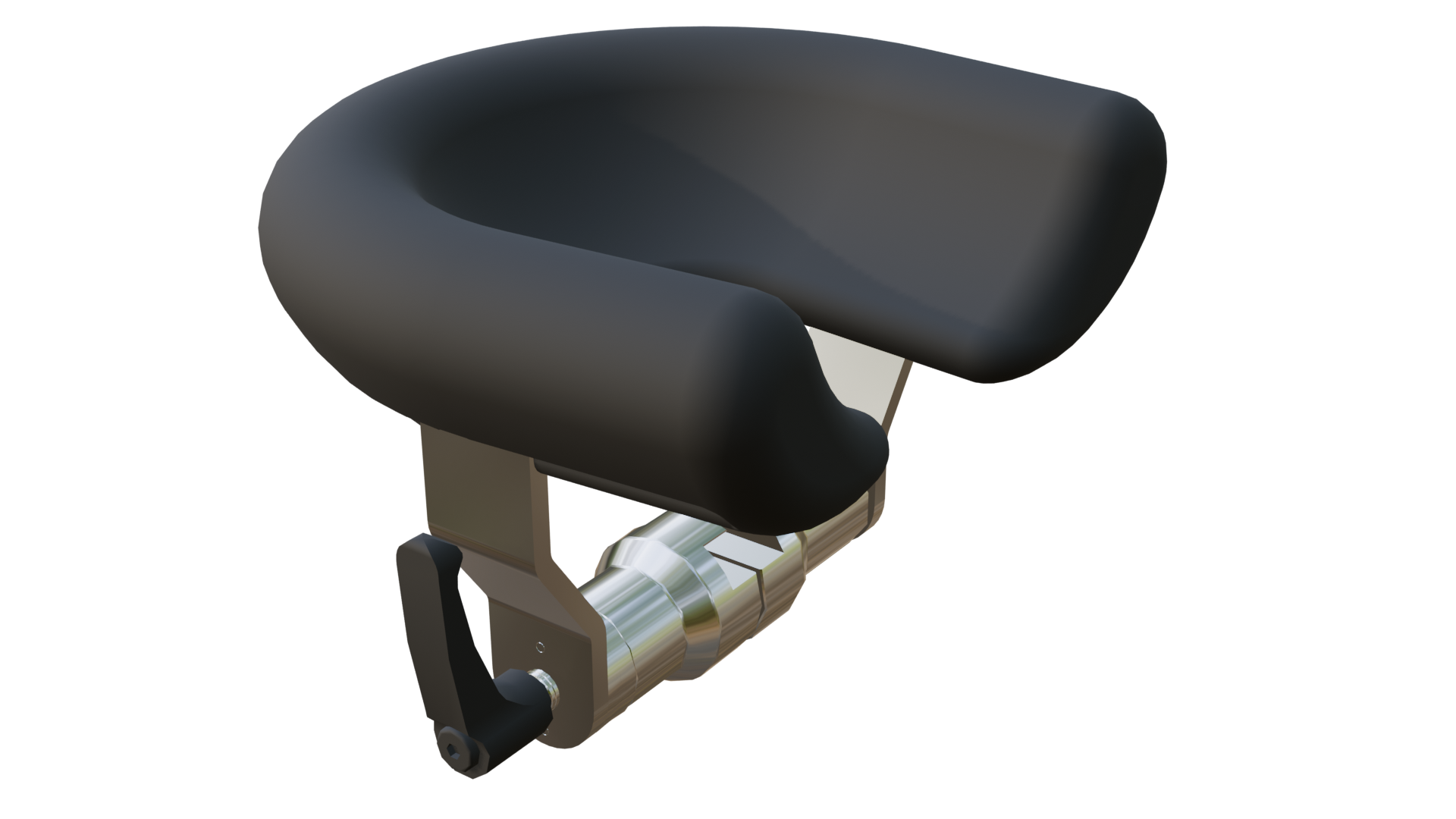
Headrest with a recess
Tiltable headrest with a recess for the back of the head and a removable integral foam cushion. Supplied without headrest bracket.
Item No.: 241.030690
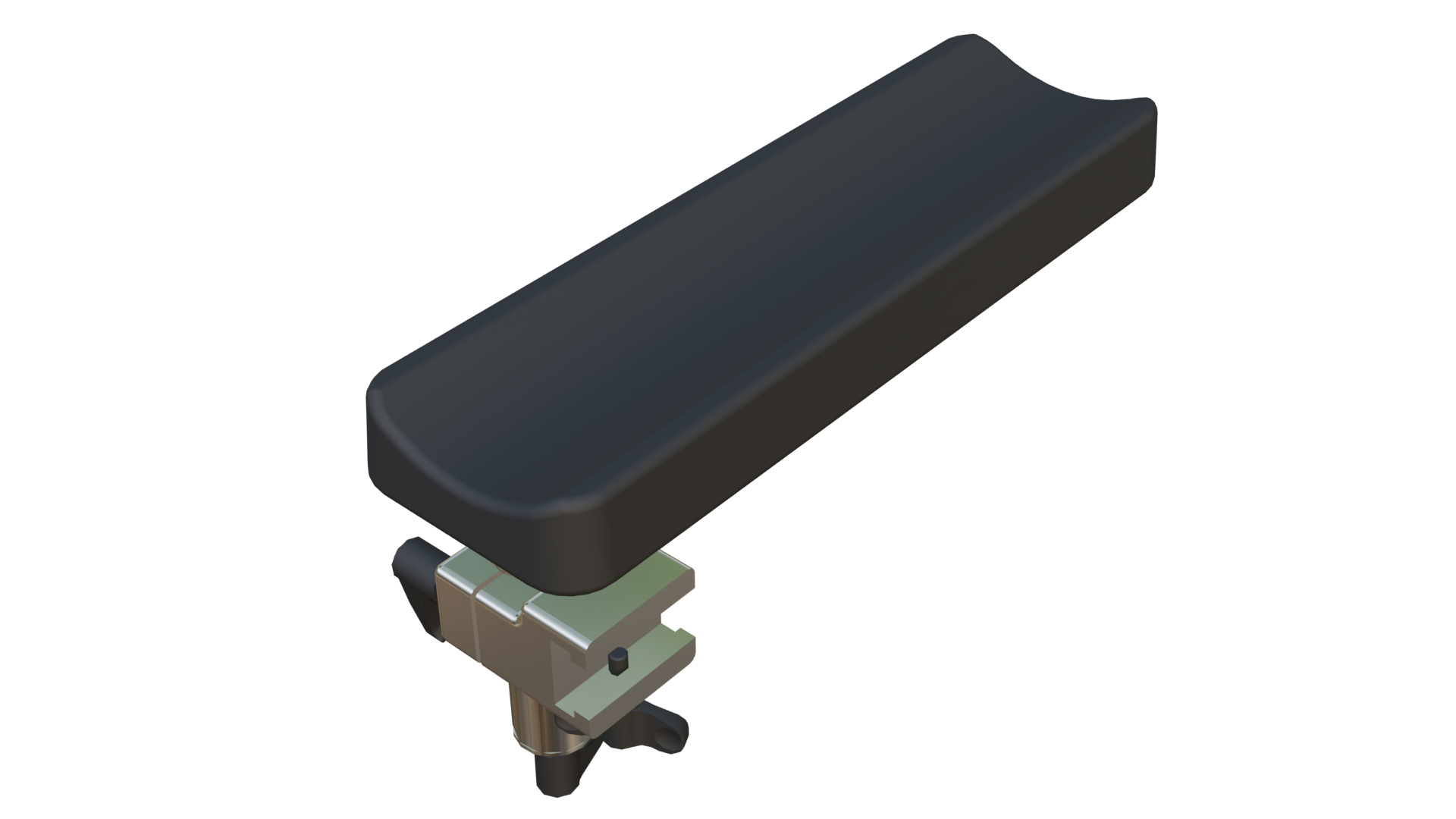
Armrest with ball joint
Flexibly adjustable armrest for use in a reclined position. Mounts to the standard rail, including clamping blocks.
Item No.: 241.030250
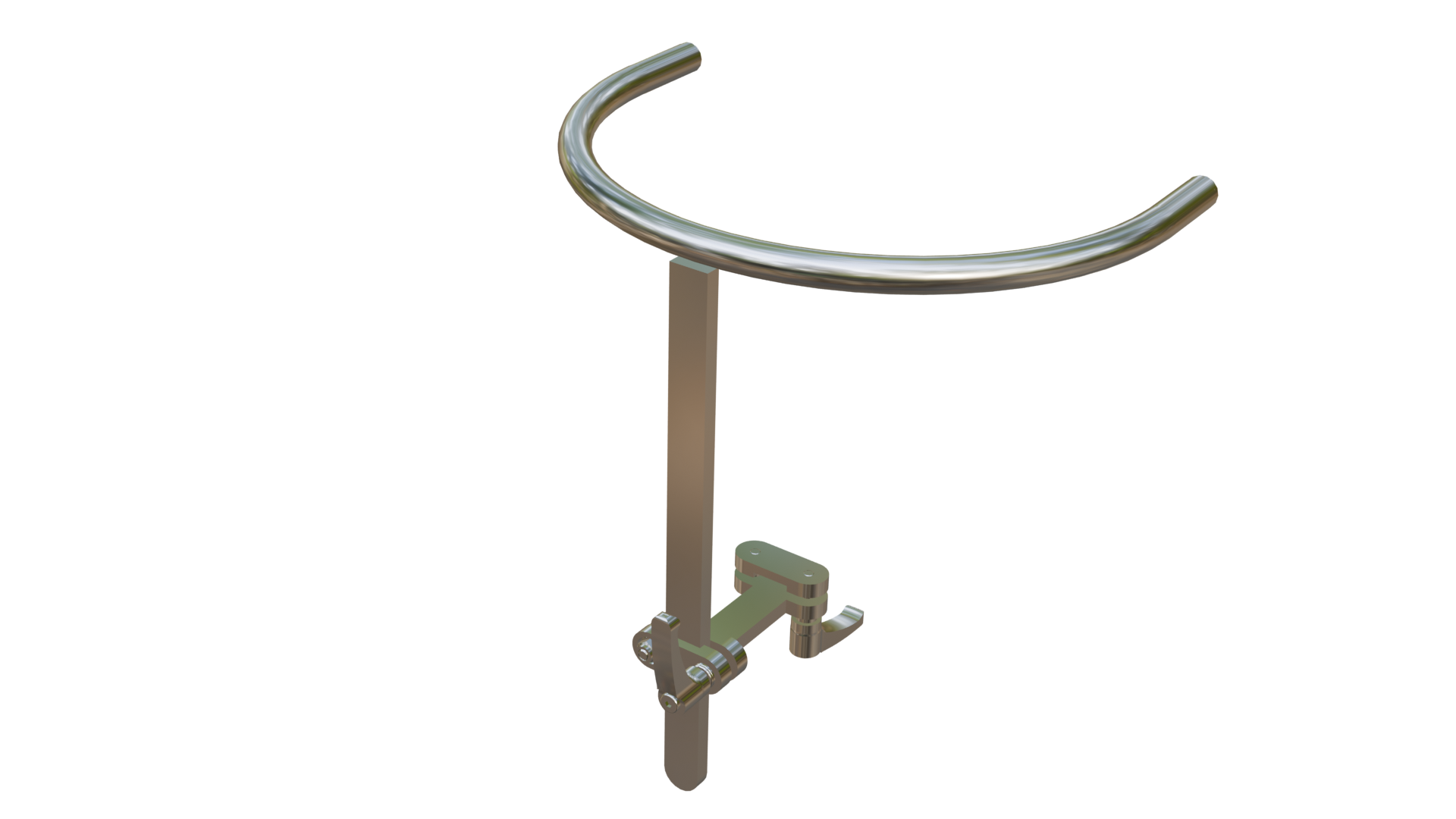
Armrest for the practitioner
Height-adjustable support to relieve pressure on the forearms and wrists during the procedure.
Item No.: 240.030400
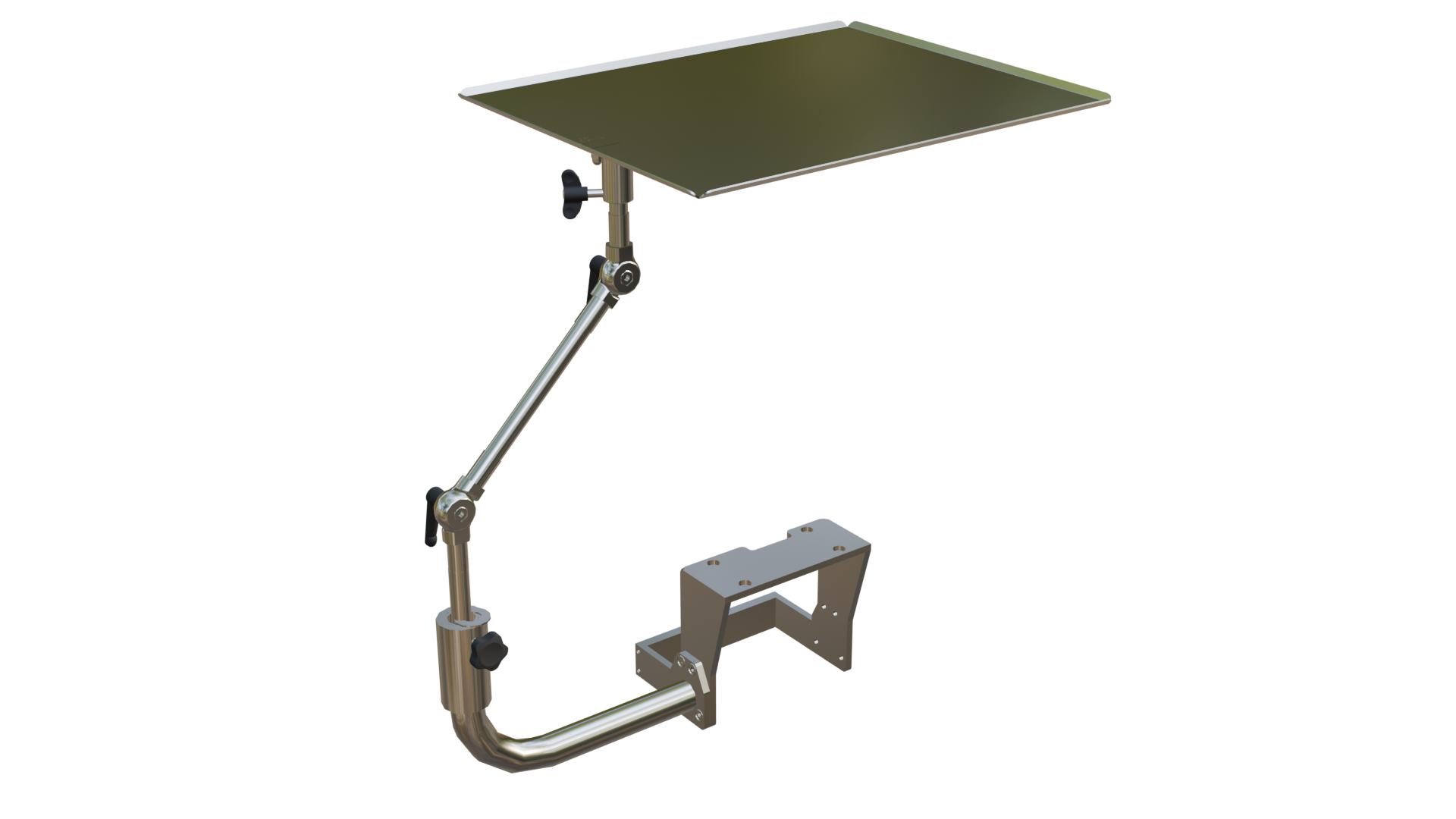
Swivel Instrument Tray
Swivel, tilt, and height-adjustable instrument tray for mobile AKRUS surgical chairs and operating tables. Includes mounting kit for the lifting column housing.
Item No.: 275.020400
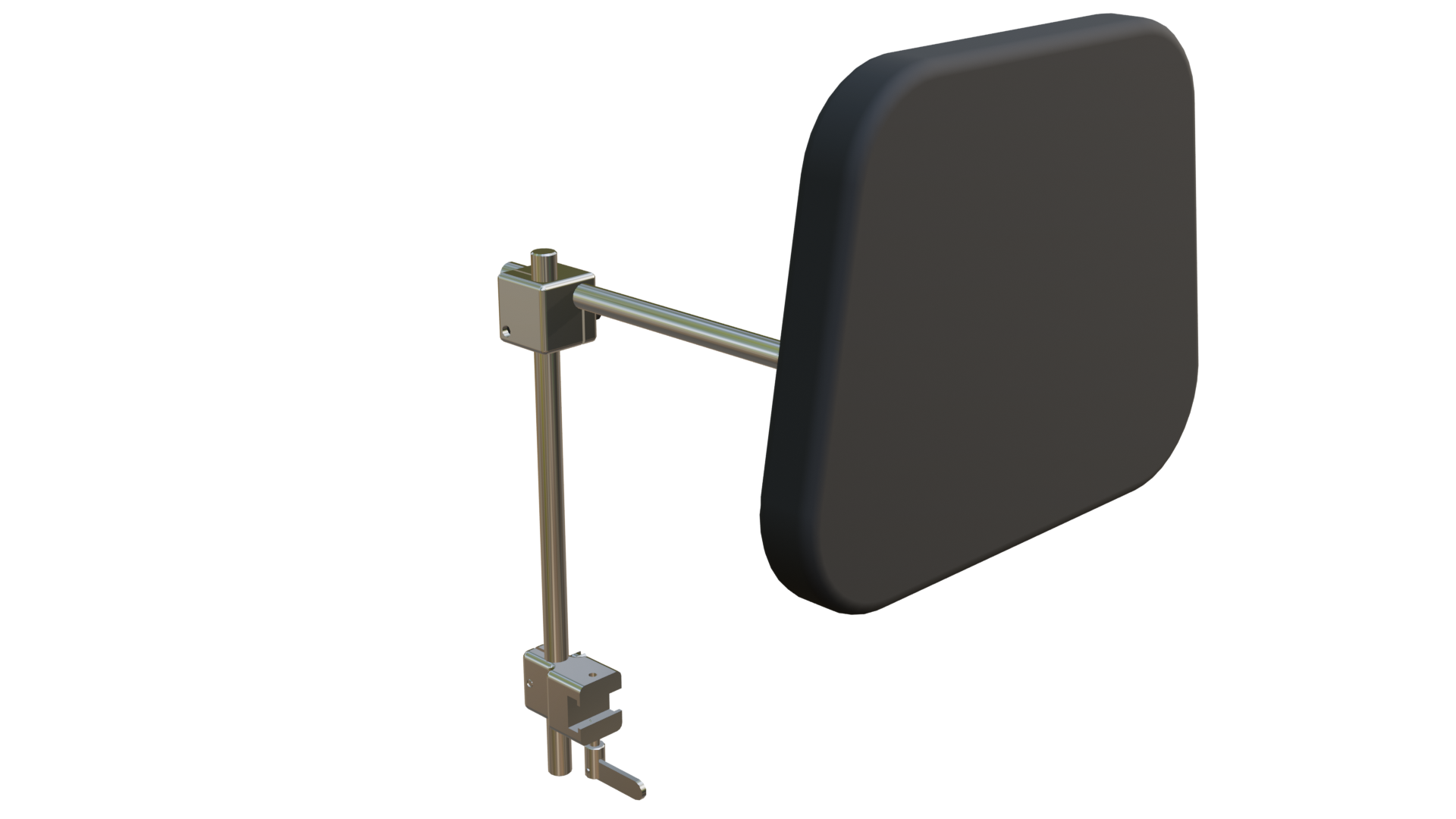
Back Support for the Lateral Position
Provides back support during examinations and procedures in the lateral position. Listed in the AKRUS catalog under “Arthroscopy Support for Abdomen/Back.”
Item No.: 276.032400
The right equipment for your dermatology practice.
We can help you select the right surgical chairs, operating tables, and ergonomic seating solutions.
Planning and Selecting the Right Equipment
Needs-based planning aligns the range of treatments with the spatial and organizational requirements. The following points are particularly relevant when selecting an examination table, a surgical chair, or a surgical table:
Range of Treatments: What examinations, treatments, and surgeries are routinely performed? Which areas of the body are the focus?
PatientPositioning: Are patients primarily positioned lying down, sitting, or semi-seated? Are side-lying or prone positions required?
Access and Working Height: What requirements arise from the patients’ mobility and the team’s seated or standing work positions?
Space Planning: Will the base, treatment surface, and accessories fit through the doors? Is there sufficient space for maneuvering and for accessing the treatment area?
Load Capacity and Accessories: What model, headrests, and cushions are required for the planned applications?
Reprocessing and Service: How can cleaning, training, maintenance, and spare parts supply be integrated into existing workflows?
The price depends on the model, electrical features, accessories, and scope of service. Quotes can be meaningfully compared when they are based on comparable specifications. In addition to the initial purchase cost, long-term planning should also include maintenance and the potential replacement of worn upholstery.
If there are multiple workstations, it’s worth considering the tasks separately. An examination table does not need to have the same features as a system designed for surgical procedures. Conversely, versatile, adjustable surgical chairs and tables can support multiple applications at a single workstation.
Frequently Asked Questions About Dermatology Equipment
For which dermatological procedures are surgical chairs and operating tables used?
Typical applications include the removal of skin lesions, skin tumors, cysts, and lipomas, as well as procedures involving the nail. Diagnostic tissue biopsies and select aesthetic treatments also require stable positioning and good access to the treatment area.
What equipment does a dermatology practice need?
The equipment depends on the services offered: An examination table is suitable for diagnostic purposes. For surgical procedures, suitable surgical chairs and operating tables are appropriate; depending on the model, both can support different patient positions and surgical functions. Additional equipment includes lighting, instrument trays, and ergonomic seating solutions for the treatment team.
When is a surgical chair useful in dermatology?
A surgical chair is particularly useful when different seated, semi-seated, and reclined positions are required. Its adjustment options make it easier to switch between examinations and treatments. Even longer procedures can be performed on a surgical chair that is suitable and appropriately equipped for this purpose.
What is the difference between an examination table and a surgical table?
An examination table is primarily used for positioning patients during diagnostic examinations and general treatments. A surgical table is designed for surgical procedures. Differences vary by model and include adjustment options, construction, and available accessories.
What is the required weight capacity of a surgical table?
The weight capacity must be sufficient for the intended patient population. Some models offer different lift columns. The decisive factor is the maximum patient weight for the selected model, including the specifications for any accessories used.
How important is a suitable headrest?
During treatments involving the face and scalp, the headrest helps maintain a stable position and keeps the treatment area accessible. Its shape, padding, and adjustment options should therefore be suited to the intended use.
Are you looking for the right equipment for dermatology?
Together, we’ll find the right solution for your needs—whether in a medical practice, outpatient surgical center, or hospital—from patient positioning to ergonomic seating solutions for the treatment team.